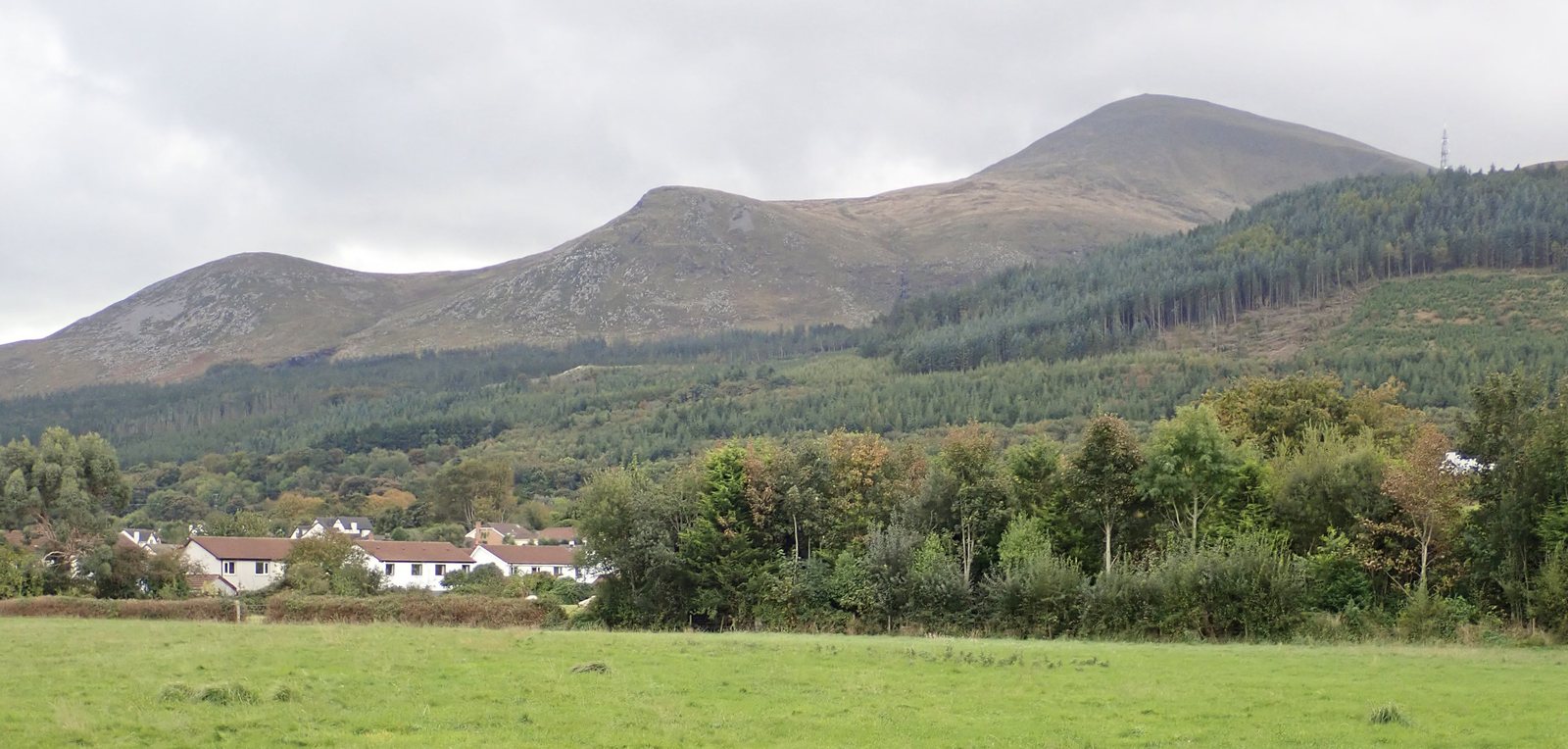
Follow the mountain’s changing character.
The Glen River climb is memorable because the scenery does not stay the same. Woodland gives way to an open valley; an estate cold store appears on the hillside; a long water boundary becomes a companion for the last steep ascent. At the top, prehistoric monuments sit within a much later engineering landscape.
Start with the eight route stages if you want to recognise those transitions during the walk. Read the stories below if you want to know what those landmarks mean. Neither replaces a route map or current conditions check.
Choose a closer look.
Cairns, saints & surveyors
Prehistoric monuments, religious tradition and the people who used a summit to measure the land.
The little ice house
A nineteenth-century cold store connects a mountain valley with life at Donard Lodge.
A wall built for water
Understand why a granite boundary crosses the mountains and what its line encloses.
Granite, water & mountain life
Rock formed below ground, a river running towards the town, and habitats worth treading carefully around.
Read the summit
Height, cairns, the view towards Commedagh and the next decision: getting back well.
Notice more without carrying more.
Choose one thing to pay attention to on the way up: how the sound of the river changes, where the trees give way to open ground, or when the Wall first becomes clear. You do not need a long checklist of sights to have an observant day.
On the return, the same path can look quite different. That is a pleasure and a navigation reminder: a landmark seen from one direction may be less obvious from the other. Keep the route on your map, rather than relying only on a remembered view.
If you like recording a day in your own words, the mountain journals have authentic sample pages you can read here. Record what you actually experienced, including the day you chose a lower walk or turned back early.
Put Donard in a wider Mourne day.
This site stays close to one mountain. For comparing other walks, nearby places and a broader visit, use Mourne Guide. Compare the exact route’s published distance and terrain; a lower mountain is not automatically an easier outing.
Keep extra summits and detours out of a Donard plan unless you have deliberately researched and prepared for them. A mountain view is an invitation to another day, not an instruction to add everything in sight to this one.
Sources & review notes
Editorial research reviewed 16 October 2026. These are source observations, not a live conditions report. Photographs have separate credits and dates.
Editorial review: 16 October 2026 · How we use sources